
18 May Effective Budget Management in Custom Home Construction
Effective Budget Management in Custom Home Construction
Discover how to plan and control your custom home construction budget. Learn about material costs, allowances, and design-build methods that avoid budget surprises.
Building a custom home in Chicago is one of the most significant investments you’ll ever make – and managing your custom home construction budget is the single most important factor in turning your vision into reality without unwanted surprises. Whether you’re planning a new build on the North Shore or a ground-up luxury home in Lincoln Park, understanding how construction budgets work puts you in control from day one.
The challenge is that custom home building costs in Chicago can vary dramatically depending on lot conditions, material selections, design complexity, and dozens of other variables. Without a clear budgeting strategy, even well-planned projects can drift off course – leading to stressful conversations, compromised finishes, or timelines that stretch beyond expectations.
That’s exactly what this article addresses. Below, you’ll learn how to establish a realistic custom home construction budget, where costs typically land for luxury builds in the Chicago metro area, how the design-build model keeps spending aligned with your goals, and what experienced homeowners wish they had known before breaking ground.
Key Takeaways
- A well-structured custom home construction budget accounts for land, hard costs, soft costs, and a contingency reserve – not just the build price per square foot.
- Chicago-area custom home building costs vary widely based on location, lot conditions, finishes, and design complexity, making early budget alignment essential.
- The design-build approach consolidates architecture, design, and construction under one team, reducing the cost overruns and miscommunications that fragment traditional project delivery.
- Pre-construction planning – including detailed scope documents, material selections, and allowance tracking – is the most effective tool for preventing budget surprises.
- Transparent communication with your builder throughout every phase keeps your project on track financially and emotionally.
What Does a Custom Home Construction Budget Actually Include?
When most people think about the cost to build a custom home, they picture the construction itself – framing, roofing, plumbing, electrical. But a complete custom home construction budget is broader than that, and understanding its components early prevents the sticker shock that catches first-time builders off guard.
Your budget typically breaks down into three major categories. Hard costs cover the physical construction: foundation, structural systems, mechanical systems, exterior finishes, and interior buildout. Soft costs include architecture and design fees, engineering, permits, surveys, inspections, and insurance. Land costs encompass the lot purchase, site preparation, demolition of existing structures (common in established Chicago neighborhoods), and utility connections.
Beyond these three categories, every responsible budget includes a contingency reserve – typically 10-15% of the total project cost. This isn’t a slush fund; it’s a safety net for unforeseen conditions like unexpected soil issues, municipal requirements discovered during permitting, or material lead-time changes that require substitutions. Amrami Design + Build Group builds contingency planning into every project from the pre-construction phase, so clients understand exactly what that reserve covers and when it might be accessed.
How Much Does It Cost to Build a Custom Home in Chicago?
This is the question every prospective homeowner asks, and the honest answer is: it depends. Custom home building costs in Chicago range significantly based on the scope and caliber of the project. For a high-end custom build on the North Shore – in communities like Winnetka, Glencoe, or Wilmette – you can expect construction costs to start well above standard residential pricing.
Several factors drive the final number. Lot size and topography affect foundation and site work costs. Architectural complexity – rooflines, cantilevered elements, open floor plans with engineered beams – adds structural expense. Finish selections like imported stone, custom cabinetry, and premium appliance packages can represent 30-40% of the total build cost. Even the time of year you break ground can influence pricing, since material costs and subcontractor availability fluctuate seasonally in the Chicago market. The National Association of Home Builders regularly publishes data on construction cost trends, and their reports consistently show that material and labor costs are among the most volatile line items in any residential build.
Rather than fixating on a per-square-foot number – which can be misleading for custom work – focus on defining your priorities and working with a builder who provides detailed, line-item estimates. At Amrami Design + Build Group, the pre-construction planning phase is specifically designed to align your wishlist with your budget before construction begins.
Why Does the Design-Build Model Protect Your Budget?
The traditional approach to custom home building separates the architect, designer, and general contractor into independent roles. Each operates on their own contract, their own timeline, and their own interpretation of the project scope. This fragmented structure is one of the most common reasons custom home construction budgets blow up – the architect designs features the builder hasn’t priced, the interior designer specifies finishes that exceed allowances, and by the time everyone is in the same room, the numbers don’t work.
The design-build model eliminates this disconnect by placing architecture, interior design, and construction under one roof. When a single team manages every phase, budget implications are evaluated in real time. If a design decision increases cost in one area, the team can identify offsets or alternatives immediately – before drawings are finalized and contracts are signed.
This is central to how Amrami Design + Build Group operates. Their integrated approach means that the designer sketching your kitchen layout and the project manager pricing that layout are part of the same team, working from the same budget. According to the Design-Build Institute of America, design-build projects are delivered faster and with less cost growth compared to traditional design-bid-build delivery – a meaningful advantage when you’re managing a significant investment.
How Can Pre-Construction Planning Prevent Budget Overruns?

Pre-construction is where budget discipline is either built or lost. This phase – which happens after design concepts are approved but before a shovel hits the ground – is your opportunity to lock in scope, finalize material selections, establish allowances, and identify potential risks. Effective luxury home budget planning starts here, because decisions made during pre-construction have a far greater impact on your bottom line than anything that happens once framing begins.
A thorough pre-construction process includes detailed scope-of-work documents that specify exactly what’s included in the contract price. It includes material and finish selections with confirmed pricing, not placeholder allowances that leave room for surprise. It includes a construction schedule with milestones tied to draw requests, so you know when payments are due and what work they correspond to.
Amrami Design + Build Group’s pre-construction process also includes constructability reviews, where the build team evaluates the architectural plans for practical issues – structural challenges, code compliance, sequencing concerns – that could create change orders later. Catching these issues on paper is dramatically cheaper than discovering them during framing. The portfolio page showcases completed projects where this methodical approach translated into finished homes that matched both the vision and the budget.
What Are the Most Common Budget Mistakes in Custom Home Building?
Even experienced homeowners make budgeting errors when building custom. Understanding the most common pitfalls helps you avoid them.
Underestimating Soft Costs
Permits, surveys, engineering, HOA review fees, utility impact fees, and temporary services (portable facilities, dumpsters, fencing) add up quickly. In Chicago and the North Shore suburbs, permitting alone can be a multi-month, multi-thousand-dollar process depending on the municipality. Budget for these line items explicitly rather than treating them as rounding errors.
Relying on Per-Square-Foot Estimates
A per-square-foot cost is useful as a rough benchmark, but it obscures the details that actually drive your budget. Two 4,000-square-foot homes can differ by hundreds of thousands of dollars depending on ceiling heights, window specifications, mechanical systems, and finish levels. Insist on itemized estimates that break costs down by trade and specification.
Making Selections After Construction Starts
Every finish selection you defer past the contract signing becomes a potential change order. When tile, countertop, or fixture selections are made mid-build, the pricing may differ from initial allowances – and the schedule impact of late-arriving materials compounds the cost. The most budget-conscious approach is to finalize as many selections as possible during pre-construction.
Skipping the Contingency
Eliminating the contingency reserve to make the base number look more comfortable is a false economy. Unforeseen conditions are part of every construction project, and a reasonable contingency – typically 10-15% – is what separates a stressful build from a manageable one.
How Do You Track and Manage Costs During Construction?
Effective custom home construction cost management doesn’t end when construction starts – it requires ongoing discipline and clear communication between you and your builder throughout the project.
The best builders provide regular budget updates, typically aligned with monthly draw schedules or construction milestones. These reports should show original budget amounts, approved changes, current spending, and remaining balances for each cost category. If your builder isn’t providing this level of transparency, ask for it.
Change orders are the primary mechanism through which budgets shift during construction. A change order documents any deviation from the original scope – whether it’s something you’ve requested (upgrading a fixture, adding a built-in) or something the project requires (unforeseen structural conditions, code-related modifications). Every change order should include a clear cost, a timeline impact assessment, and your written approval before work proceeds.
At Amrami Design + Build Group, the philosophy of “no surprises” extends throughout the build. Clients receive transparent cost tracking and proactive communication when any issue arises that could affect the budget or schedule. If you’d like to discuss how this approach would work for your project, their contact page is the place to start.
What Role Do Material Selections Play in Budget Control?
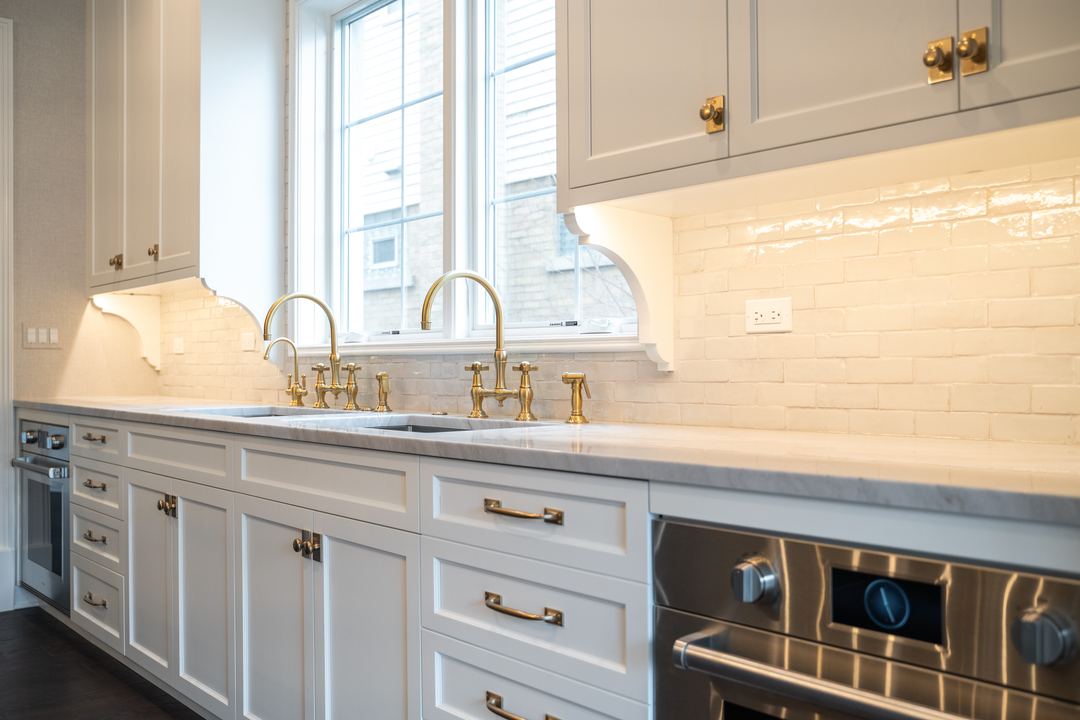
Material and finish selections are the area where custom home budgets have the most flexibility – and the most risk of creeping upward. The difference between standard and premium options in categories like flooring, countertops, cabinetry, windows, and appliances can represent a six-figure swing on a luxury build.
The key is to prioritize. Identify the rooms and features that matter most to your daily life and allocate your premium selections there. A show-stopping kitchen with custom cabinetry and a professional-grade range makes a bigger impact than upgrading every closet with the same level of finish. Similarly, investing in high-performance windows and insulation delivers long-term energy savings that offset the upfront premium – a particularly relevant consideration in Chicago’s climate, where heating costs are a year-round concern.
Your builder should present material options at multiple price points with clear cost comparisons, so you can make informed trade-offs rather than reacting to invoices after the fact. This is another area where the design-build advantage comes through: when the designer and builder share the same budget data, they can collaboratively guide selections that achieve the aesthetic vision without quietly eroding the contingency.
Your Budget Is the Blueprint for a Successful Build
A custom home construction budget is more than a spreadsheet – it’s the framework that keeps your project aligned with your expectations from the first sketch to the final walkthrough. When your budget is built on realistic numbers, detailed planning, and transparent communication with your builder, the entire experience changes. You make decisions from a position of confidence rather than anxiety.
For homeowners in Chicago and the North Shore, working with a design-build firm like Amrami Design + Build Group means your budget is integrated into every decision from day one. Their in-house team, with over 20 years of experience, manages design, construction, and cost control under one roof, so nothing falls through the cracks. If you’re ready to start planning your custom home, reach out to the team and take the first step toward building with clarity and confidence.
Frequently Asked Questions
How Early Should I Set My Custom Home Construction Budget?
As early as possible – ideally before you’ve purchased a lot or finalized architectural plans. Setting a realistic budget range upfront gives your design-build team the parameters they need to create plans that match your vision and your financial comfort zone. Amrami Design + Build Group begins budget conversations during the initial consultation, well before any design work starts.
What Percentage of My Budget Should Go Toward Finishes?
For a high-end custom home, interior finishes and fixtures typically represent 30-40% of the total construction budget. This includes flooring, cabinetry, countertops, tile, lighting, plumbing fixtures, and appliances. The percentage can shift depending on the complexity of the home’s structural design and the level of finish you’re targeting.
Can I Build a Custom Home in Chicago on a Fixed-Price Contract?
Many design-build firms, including Amrami Design + Build Group, offer fixed-price contracts once the scope, selections, and specifications are fully defined during pre-construction. The key is completing thorough pre-construction planning so the contract price reflects the actual project – not a rough estimate with open-ended allowances.
How Do Change Orders Affect My Budget?
Change orders adjust the contract price to reflect scope changes – whether homeowner-requested upgrades or unforeseen site conditions. Each change order should include a detailed cost breakdown and your approval before work proceeds. Minimizing change orders starts with thorough pre-construction planning and finalizing selections before construction begins.
What’s the Biggest Budget Risk in Custom Home Construction?
The single biggest risk is insufficient planning before construction starts. When scope, selections, and site conditions aren’t thoroughly evaluated during pre-construction, the project relies on assumptions – and assumptions become change orders. Working with an experienced design-build team that prioritizes detailed pre-construction planning is the most effective way to protect your budget.

Thinking about building?
Bring your lot, your wish list, or just your questions. The first conversation is with the team that will design and build it, and it is free.
Sorry, the comment form is closed at this time.